Water Damage to Wood Floors: A Complete Restoration Guide for Utah Homeowners
This guide covers the causes, warning signs, and restoration process Northern Utah homeowners need to know—from immediate response steps to professional flood damage repair and structural drying.
Wood floors are one of the most valued features in a home—warm, durable, and beautiful when properly maintained. But when water finds its way in, whether from a burst pipe, an appliance leak, or springtime flooding, those same floors can buckle, warp, and discolor within hours. Understanding how to respond quickly and effectively is the difference between a full restoration and a full replacement.
Water damage to wood floors is both more common and more complex than most homeowners realize. In Northern Utah, where seasonal temperature swings mean frozen pipes in winter and snowmelt flooding in spring, the risk is present throughout the year. This guide walks through everything homeowners need to know—from the first signs of trouble to the final stages of flood damage repair.
Why Wood Floors Are Especially Vulnerable to Water Damage
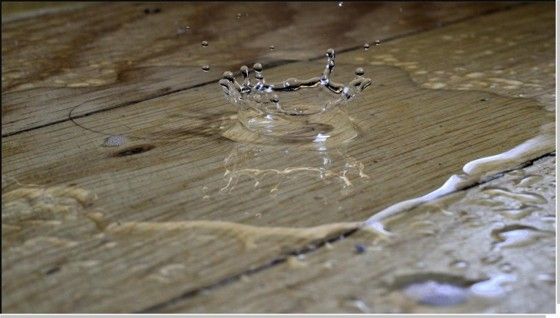
Wood is a hygroscopic material, meaning it naturally absorbs and releases moisture in response to its environment. Under normal conditions, this is manageable. Under flood or leak conditions, it becomes a serious structural problem.
When water damage occurs in wood floors, the moisture penetrates the grain of the wood and causes the boards to swell. As they expand, they push against each other with nowhere to go—leading to the characteristic "cupping" (edges rising higher than the center), "crowning" (the center rising above the edges), or full buckling where boards lift entirely off the subfloor. These aren't cosmetic issues. They're signs of deep moisture infiltration that, if left unaddressed, will continue to worsen.
Engineered hardwood tends to handle moisture slightly better than solid hardwood, but neither is immune. Laminate flooring, which contains a wood composite core, is particularly susceptible and rarely survives significant water damage without replacement. Any type of wood flooring exposed to standing water for more than 24–48 hours is at serious risk.
Common Causes of Water Damage on Wood Floors in Northern Utah
Water damage repairs related to wood floors tend to follow a predictable set of causes in Utah homes.
Frozen and burst pipes are a major culprit during Utah winters. When temperatures drop sharply in Cache Valley, Weber County, and the Ogden area, pipes in uninsulated spaces—crawl spaces, exterior walls, garages—can freeze and rupture, releasing large volumes of water onto flooring in minutes.
Appliance failures, particularly from dishwashers, refrigerators with ice makers, and washing machines, account for a large share of indoor water damage. A slow leak behind a dishwasher or refrigerator can saturate the subfloor and underside of hardwood for weeks before it becomes visible on the surface.
Spring snowmelt flooding is a recurring concern in many Northern Utah communities, especially in lower-lying areas or homes without adequate grading. Meltwater that finds its way through foundation cracks or low window wells can reach hardwood floors quickly.
Roof leaks and HVAC condensation issues are less dramatic but can be equally damaging over time, particularly to second-floor hardwood or wood-paneled areas near air handlers and ductwork.
Recognizing the Signs: How to Spot Water Damage on Wood Floors
Not all water damage is immediately obvious. In fact, some of the most costly flood damage repairs begin with subtle warning signs that are easy to overlook or misattribute to normal seasonal wood movement.
Visible cupping or crowning in the boards is usually the first physical sign. Boards that feel springy or spongy underfoot are another strong indicator. Discoloration—dark staining, gray patches, or white haziness—often signals that moisture has already been sitting for some time.
A musty or earthy odor near the floor is a warning sign that shouldn't be ignored. This smell often precedes visible mold growth, particularly in Utah homes where temperature differentials create ideal conditions for condensation in crawl spaces and under subfloors.
Gaps appearing between boards—especially if they close and reopen with the seasons—can indicate chronic moisture exposure rather than a single event. If the pattern seems inconsistent with Utah's typical dry summers, a moisture meter reading from a professional can provide a clearer picture of what's happening beneath the surface.
Immediate Steps to Take After Water Damage to Wood Floors
Speed matters enormously when dealing with water damage on wood floors. The first 24–48 hours are the most critical window for limiting the extent of swelling, preventing mold growth, and preserving the possibility of restoration rather than full replacement.
Stop the source of water first. Whether that means shutting off the main water supply, addressing the appliance leak, or moving items away from a roof leak, nothing else matters until the water stops flowing.
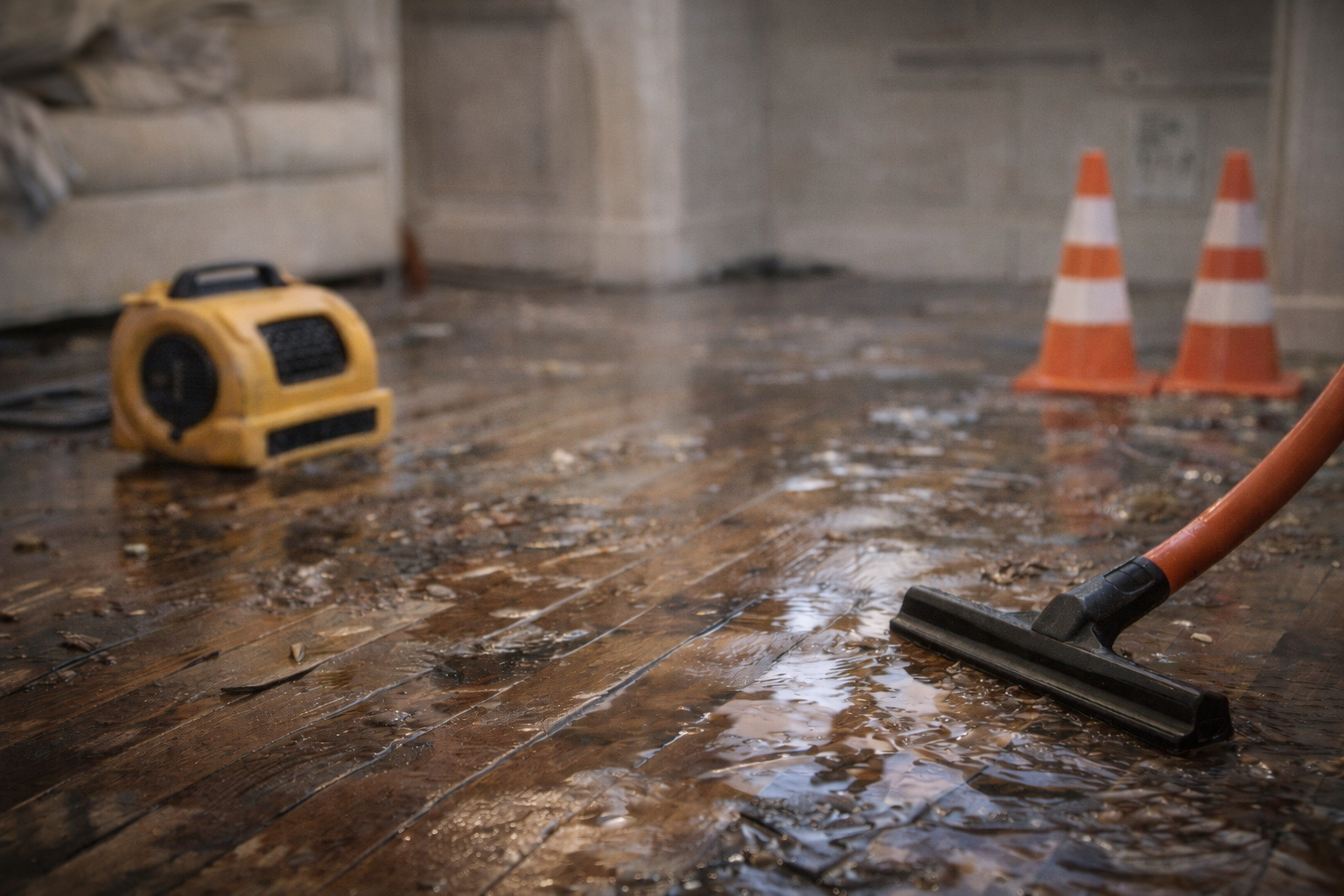
Remove standing water as quickly as possible using wet-dry vacuums, mops, and towels. For larger flood damage scenarios, professional water extraction equipment is significantly more effective and faster than manual removal.
Increase airflow and begin the drying process. Open windows if outdoor humidity allows, run fans, and use a dehumidifier to pull moisture out of the air and the flooring. In Northern Utah's dry climate, outdoor air can sometimes accelerate drying—but in spring, when outdoor humidity is higher, this may not always be the right call.
Avoid the temptation to use excessive heat to speed drying. High heat applied directly to wet wood can cause it to crack and further warp. Slow, controlled drying at room temperature with consistent airflow produces better outcomes.
Professional Water Damage Restoration: What the Process Looks Like
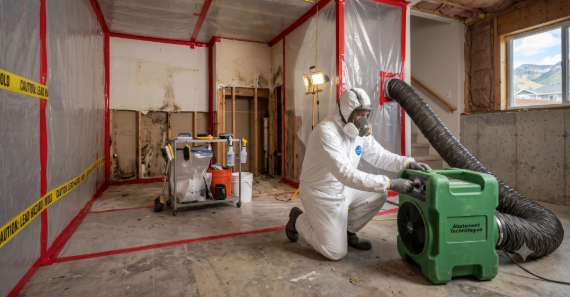
For anything beyond a very minor surface spill, professional water damage restoration is the appropriate course of action. Wood flooring restoration after significant water damage involves equipment and expertise that go well beyond what household tools can provide.
A professional assessment typically begins with moisture mapping—using thermal imaging cameras and calibrated moisture meters to identify exactly how far moisture has traveled, including into the subfloor, wall bases, and adjacent rooms. This step is critical because water follows paths that aren't always visible to the naked eye.
Industrial desiccant dehumidifiers and air movers are then deployed to begin the structural drying process. In Northern Utah homes, thorough structural drying typically takes three to five days, though heavily saturated subfloors or thick solid hardwood planks can require longer. Moisture readings are taken throughout to confirm progress.
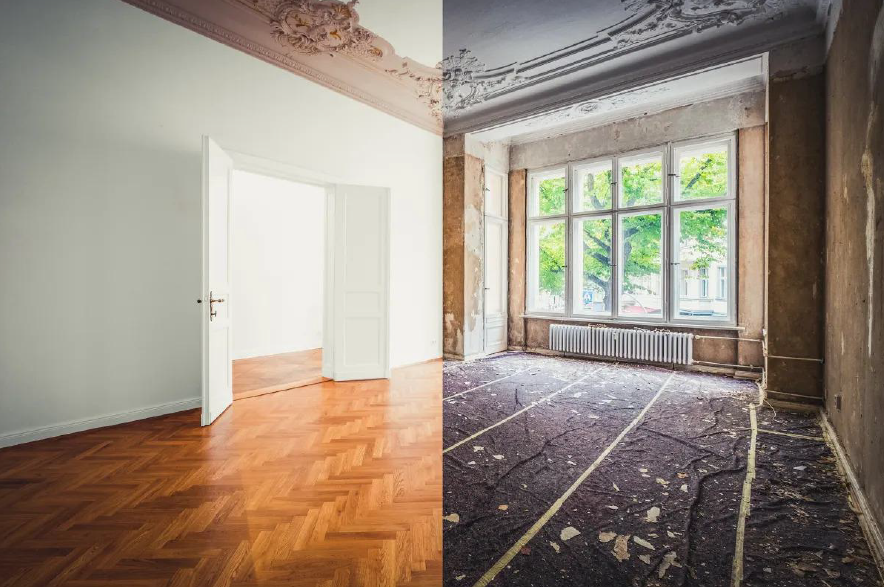
Flood damage repair decisions are made after drying is complete and final moisture levels are confirmed. At that point, a restoration professional can assess whether boards can be refinished in place, whether sections need replacement, or whether the subfloor has been compromised. Not all water-damaged hardwood must be replaced—properly dried floors can often be sanded, leveled, and refinished to like-new condition.
Mold Risk: The Hidden Danger Beneath Water-Damaged Wood Floors
One of the most serious secondary concerns with water damage to wood floors is mold growth in the subfloor, joists, and crawl space below. Mold can begin developing within 24–48 hours of water exposure, and it often establishes itself in these hidden spaces long before it becomes visible from above.
In Northern Utah, the combination of older home stock in areas like Ogden and Logan—where crawl spaces are common—and seasonal moisture events creates real mold risk. A flooring restoration that doesn't address the subfloor and underlying structure can result in recurring odor, continued moisture problems, and eventual mold remediation needs on top of the original water damage repairs.
This is one of the primary reasons professional assessment matters even when surface damage appears mild. A professional restoration team looks below the floor, not just at it.
Flood Cleanup Services: Choosing the Right Help in Northern Utah
When it comes to flood cleanup services and water damage restoration, not all providers are equal. For wood floor restoration specifically, the key is finding a team that understands the full scope of structural drying and doesn't stop at surface-level cleanup.
In Northern Utah, where communities range from densely built suburbs in Davis and Weber Counties to more rural areas in Box Elder and Cache Counties, response time matters. The longer water sits in wood, the harder restoration becomes and the more likely replacement becomes necessary. A local provider who can respond quickly and begin extraction and drying within hours of a call can make a significant difference in the outcome.
Look for water damage restoration providers who document moisture readings throughout the process, use industrial-grade drying equipment, and provide clear communication about whether boards can be saved or need replacement. Transparency at every stage—from assessment through final flood damage repair—is the mark of a trustworthy restoration partner.
The Bottom Line on Water Damage to Wood Floors
Water damage to wood floors is one of the more stressful home emergencies a Utah homeowner can face — but it's also one of the more recoverable ones when addressed promptly and correctly. The key variables are response time, drying thoroughness, and the expertise applied to the assessment and repair process.
For Northern Utah homeowners, the seasonal realities of cold winters, spring snowmelt, and aging home infrastructure mean water damage is a risk worth planning for. Knowing the warning signs, understanding the restoration process, and having a reliable local water damage restoration team to call can protect one of your home's most valuable features—and save tens of thousands of dollars in unnecessary replacement costs.
You might also like
Utah Flood Guys Blog