Sewage Backup and Contaminated Water Cleanup: What Utah Homeowners Need to Know
This is a subtitle for your new post

Of all the water damage scenarios a homeowner can face, sewage backup is among the most serious—and the most misunderstood. Unlike a burst pipe or appliance leak, sewage backup introduces contaminated water into a home, turning what might look like a simple cleanup job into a situation that requires professional intervention, proper containment, and thorough decontamination.
In Northern Utah, sewage-related water damage is more common than many homeowners expect. Aging municipal sewer lines in older communities, spring flooding that overwhelms drainage systems, and shifting soils that stress private septic systems all create conditions for backup events. Understanding what category of water you're dealing with, why it matters, and what proper flood cleanup services actually involve can help homeowners make faster, better decisions when the situation arises.
The Three Categories of Water Damage—and Why Category Matters
Not all water damage is created equal. The restoration industry classifies water contamination into three categories that determine how extensive the cleanup and flood damage restoration process needs to be.
Category 1—Clean Water: Water from a sanitary source such as a broken supply line, failed appliance inlet, or overflow from a clean sink. While still damaging to building materials, it poses minimal immediate health risk to occupants.
Category 2—Gray Water: Water that contains significant chemical or biological contamination but not solid waste. Overflows from washing machines, dishwashers, and sink drains fall into this category. Gray water can cause illness if ingested or if skin contact is prolonged, and it degrades to Category 3 quickly if left untreated.
Category 3—Black Water: The most hazardous classification. Black water includes sewage backup, flooding from rivers or storm drains, and any water that has contacted human waste or highly contaminated sources. It contains bacteria, viruses, and parasites that pose serious health risks. Any water damage that has been sitting for 48–72 hours without treatment is also reclassified as Category 3 regardless of its original source.
This classification system isn't just academic. It determines the personal protective equipment required during cleanup, which materials can be dried and salvaged versus which must be removed and discarded, and what decontamination standards apply. Treating Category 3 water damage the same way as a Category 1 pipe leak is one of the most common—and costly—mistakes homeowners make.
Common Causes of Sewage Backup in Northern Utah Homes
Sewage backup events tend to follow predictable patterns, and understanding the causes helps homeowners in the Salt Lake City area, Ogden, Logan, and surrounding communities assess their risk and take preventive steps.
Mainline blockages are one of the most frequent culprits. Tree roots infiltrating aging clay or cast iron sewer lines—common in older Utah neighborhoods—create obstructions that eventually cause sewage to back up into the lowest drains in a home, typically floor drains, basement toilets, and laundry sinks.
Municipal system overload during heavy rain or snowmelt events can push sewage back through connections into homes. Combined sewer systems, which handle both stormwater and sanitary sewage in a single pipe, are particularly susceptible. During Utah's spring runoff season, this risk increases substantially across communities along the Wasatch Front.
Septic system failure affects many rural and semi-rural Utah properties outside municipal sewer service areas. Saturated drain fields—common after prolonged wet periods—and full or damaged septic tanks can cause sewage to surface in yards or back up into the home.
Structural pipe damage from ground shifting, freeze-thaw cycles, or seismic activity (Utah sits on active fault lines) can crack or offset sewer lines, creating blockage points that cause backup. Homes that haven't had a sewer line inspection in years may have developing problems that haven't yet caused visible issues.
Health Risks: Why Sewage Backup Is Never a DIY Cleanup Job
The health risks associated with Category 3 water are serious enough that professional flood cleanup services are the appropriate—and in many cases the only safe—response. Sewage contains a range of pathogens including E. coli, Salmonella, Hepatitis A, norovirus, and Cryptosporidium. Exposure through skin contact, inhalation of aerosolized droplets, or incidental ingestion can cause significant illness.
The risk doesn't disappear once the visible water is removed. Contaminated material that remains in walls, subfloors, and HVAC systems continues to pose exposure risks. Porous materials—drywall, insulation, carpet, hardwood, and concrete block—absorb sewage contamination in ways that cannot be reversed with surface cleaning alone. They must be removed.
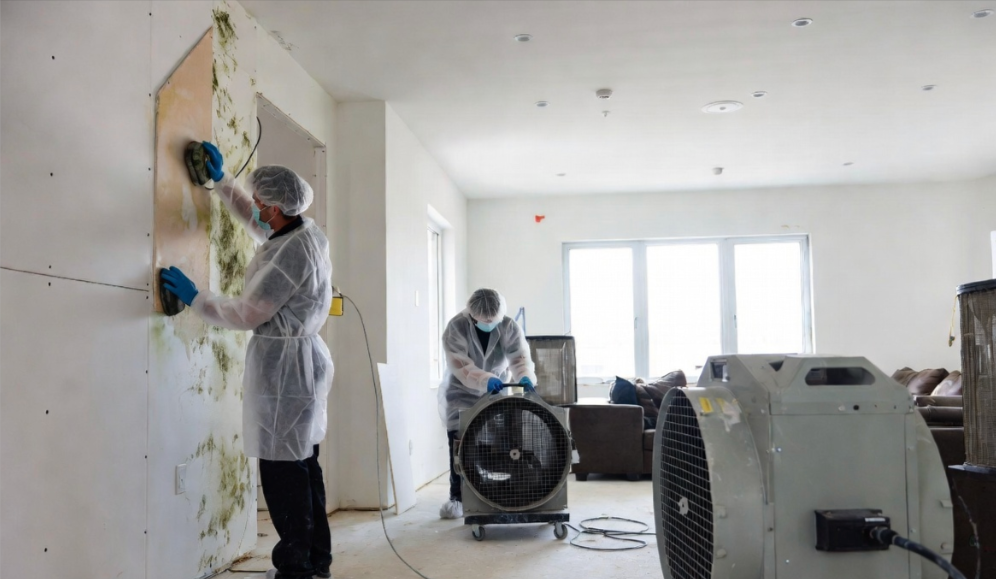
Professional flood damage restoration teams working Category 3 scenarios use respirators, impermeable gloves, protective suits, and boot covers to manage their own exposure. They also establish containment zones to prevent cross-contamination into unaffected areas of the home. This level of response isn't overcaution—it reflects the actual risk profile of sewage-contaminated environments.
What Professional Flood Damage Restoration Looks Like for Sewage Backup
The flood damage restoration process for sewage backup is more involved than standard water damage cleanup, but it follows a clear sequence that experienced restoration teams execute systematically.
Containment and safety assessment come first. The affected area is isolated using plastic sheeting and negative air pressure to prevent spore and pathogen migration. Utilities in the affected zone are evaluated for safety before any work begins.
Sewage extraction and gross contamination removal involves removing standing sewage water, solid waste, and heavily contaminated debris using industrial extraction equipment. This is the phase where proper personal protective equipment and disposal protocols are most critical.
Contaminated material removal follows. Any porous materials that contacted Category 3 water—drywall, insulation, carpet, padding, and in many cases baseboards—are removed and disposed of as contaminated waste. This step is non-negotiable; attempting to dry and retain these materials leads to persistent odor, mold growth, and ongoing health risk.
Antimicrobial treatment and structural drying are applied to all remaining surfaces. EPA-registered biocides are used to decontaminate concrete, framing, and other structural elements. Industrial drying equipment is then deployed to bring moisture levels in the structure down to baseline before reconstruction begins.
Clearance verification closes the process. Professional flood cleanup services should include post-treatment verification—whether through air quality testing, surface sampling, or moisture confirmation—before the area is considered safe for reconstruction and re-occupancy.
Immediate Steps to Take Before Professional Help Arrives
When sewage backup occurs, the safest default is to stay out of the affected area entirely until professional flood cleanup services arrive. That said, there are some steps that can be taken to limit damage and exposure while waiting for help.
Turn off electricity in the affected area if it can be done safely from a dry location. Water and electricity in proximity create serious electrocution risk, and sewage water in a basement with electrical outlets or appliances should not be entered without confirming power is off.
Avoid using any plumbing in the home until the backup source is identified and resolved. Running water from sinks, toilets, or appliances can introduce more sewage into the affected area or force contaminated water further into the structure.
Open windows in non-affected areas to increase ventilation and reduce airborne contamination levels. Do not run the HVAC system, which can distribute contaminated air and particulates throughout the home.
Document the damage with photos and video before any cleanup begins. This documentation is critical for insurance claims and should capture the extent of contamination, affected materials, and any visible sewage sources. The emergency flooding situation and its source should be clearly captured.
Insurance Coverage for Sewage Backup: What Utah Homeowners Should Know
Standard homeowner's insurance policies in Utah typically do not cover sewage backup as a default inclusion. Coverage is usually available as a separate endorsement or rider — often referred to as water backup coverage — that must be added to a policy proactively. Many homeowners discover this gap only after a backup event has already occurred.
The cost of sewage backup and flood damage restoration can range from a few thousand dollars for a contained bathroom event to tens of thousands for a finished basement with extensive contamination. Reviewing current policy coverage and adding water backup endorsements before an event occurs is a straightforward way to protect against a significant financial exposure.
When filing a claim, the documentation gathered immediately after the event — photos, moisture readings, and written assessment from a professional restoration company — forms the foundation of the claim. Reputable flood cleanup services providers are familiar with the insurance documentation process and can assist in producing the records adjusters require.
Finding Reliable Flood Cleanup Services in Northern Utah
When evaluating flood cleanup services in the Salt Lake City metro, Ogden, Logan, or surrounding Northern Utah communities, the key criteria for sewage backup response are response time, proper Category 3 certification and protocols, and transparency about what gets removed versus what gets treated.
Speed is particularly important with Category 3 water. Every hour contaminated water remains in contact with building materials expands the scope of necessary removal and increases mold risk. A restoration provider that can arrive within hours of an emergency flooding call—not days—materially affects the outcome and the ultimate cost of restoration.
Ask any provider about their water damage restoration protocols specifically for sewage backup. Legitimate providers will clearly describe their containment procedures, material removal standards, decontamination methods, and clearance verification process. Vague answers about "drying things out" after a sewage event are a red flag—Category 3 flood damage restoration has a defined standard of care that shouldn't be abbreviated.
The Bottom Line on Sewage Backup and Contaminated Water Cleanup
Sewage backup is one of those home emergencies where the right response in the first few hours has an outsized effect on everything that follows—cost, health risk, restoration timeline, and mold outcomes. The instinct to clean it up quickly and cheaply is understandable, but it reliably produces worse results than calling professional flood cleanup services immediately.
For Northern Utah homeowners, the seasonal patterns and infrastructure realities that contribute to sewage backup risk aren't going away. Being informed about the water damage categories, knowing the health stakes, and having a trusted local flood damage restoration provider in mind before an emergency occurs puts homeowners in a much stronger position when the situation demands fast action.
You might also like
Utah Flood Guys Blog