The Emotional Impact of Flood Damage in Northern Utah: What Homeowners Really Experience
This is a subtitle for your new post

Flood damage is typically talked about in square footage, moisture readings, and repair estimates. What receives far less attention is the emotional disruption that follows. The human element. When water invades a home in Northern Utah—whether from a frozen pipe in January or spring runoff along the Wasatch Front—the impact is not confined to drywall and flooring. It alters a person’s sense of stability.
Homes represent predictability. They are structured environments where routines unfold without conscious thought. When flood damage interrupts that predictability, the psychological effect can be immediate and intense. Sleep changes. Decision-making becomes strained. Even ordinary household sounds can trigger anxiety.
Understanding the emotional dimensions of flood damage is not sentimental. It is practical. Emotional strain affects how quickly homeowners act, how effectively they coordinate water damage restoration, and how well families adapt during recovery.
Why Water Inside the Home Feels So Destabilizing
There is something uniquely invasive about water. Unlike fire, which is visibly destructive, flood damage spreads quietly and often invisibly. Water seeps beneath tile, into subflooring, behind baseboards, and through insulation. In many homes—particularly those with finished basements—gravity carries water downward, extending damage far beyond its point of origin and into the very foundation.
That hidden movement creates unease. Even after any standing water is removed, uncertainty can linger like an unfriendly neighbor. Has moisture reached the framing? Is the insulation saturated? Will mold develop weeks from now, without me knowing?
Professional water damage restoration helps address that uncertainty through moisture mapping and controlled drying, but the emotional shock typically precedes any structured response. The first hours after discovering flood damage often feel chaotic. Adrenaline spikes. Narrowed focus. Small decisions feel disproportionately heavy.
The destabilization stems less from the water itself and more from the sudden loss of control.
The Weight of Uncertainty During Flood Cleanup
Uncertainty amplifies stress more than bad news does. When homeowners face flood damage, the unknowns accumulate quickly. How extensive is the damage? How long will drying take? Will insurance cover everything? Is the structure still safe?
In Northern Utah’s colder months, these questions carry some additional urgency. Frozen pipe failures often occur during sub-zero temperatures, and waiting too long to begin flood cleanup can allow moisture to refreeze or expand within structural cavities.
Professional flood restoration companies reduce uncertainty by creating measurable milestones. Moisture readings provide objective data. Drying goals are documented. Progress is tracked. That structure does more than preserve building materials—it steadies the people living inside the disruption.
Without clear communication and defined restoration services, uncertainty compounds into prolonged anxiety.
Displacement and the Loss of Routine
Routine is rarely appreciated until it disappears. A flooding event can render bathrooms unusable, remove flooring, and fill living spaces with industrial drying equipment. Dehumidifiers hum continuously. Air movers redirect airflow through open cavities. Portions of the home feel unfinished or unfamiliar. In short—your home becomes chaos incarnate.
In homes with children, elderly residents, or remote workers, this disruption reverberates throughout their daily lives. Northern Utah homes often serve as both living and working environments, especially in suburban communities stretching from Layton to Logan. When flood damage transforms those spaces into active work zones, productivity and comfort decline simultaneously.
Temporary relocation adds another layer of stress. Even short-term displacement challenges sleep schedules and family rhythms. It reinforces the sense that stability has been interrupted.
Financial Stress Beneath the Surface
Even when insurance covers much of the structural damage, financial tension remains. Flood damage introduces immediate concerns about deductibles, coverage limits, depreciation, and potential premium increases.
Insurance policies in Utah typically cover sudden and accidental water events, but gradual leaks or external flooding may fall into gray areas. Waiting for claim approval can stretch for days or weeks, leaving homeowners in limbo.
That waiting period can be psychologically taxing. Financial uncertainty affects appetite, concentration, and interpersonal communication. It shifts conversations from routine planning to contingency management.
Reliable documentation from flood restoration companies—moisture logs, photographs, and scope outlines—can help streamline some of the insurance discussions, but the emotional weight of this financial exposure remains real throughout the process.
The Quiet Grief of Lost Possessions
Flood damage often forces difficult decisions about personal belongings. Porous materials exposed to contaminated water can’t always be salvaged. Carpeting, upholstered furniture, paper goods, and stored keepsakes may require disposal, and a family heirloom might be unsalvageable.
In Northern Utah, basements frequently double as storage spaces for a family’s precious items, holiday decorations, photo albums, and memorabilia accumulated over decades. When flood cleanup includes discarding these items, the loss can feel deeply personal.
Unlike structural components, sentimental objects are not interchangeable. Restoration services can dry framing and replace flooring, but they can’t recreate handwritten notes or childhood artwork.
The grief associated with these losses is often understated because the focus remains on structural recovery. Yet for many homeowners, emotional distress stems more from personal item loss than from the drywall removal.
Decision Fatigue During Water Damage Restoration
Flood damage compresses dozens of decisions into a short time frame. Choices about materials, flooring types, cabinet replacements, scheduling, and contractor coordination must be made, usually while stress levels are elevated. Decision fatigue is a documented cognitive phenomenon. Under pressure, the brain’s ability to evaluate options declines, and people either become impulsive or paralyzed.
Structured water damage restoration processes, where you know what’s happening from beginning to end, can help reduce the mental overload. When restoration services follow clear sequences—assessment, extraction, drying, verification—homeowners can focus on fewer decisions at once to focus on the ones that really matter.
Clarity stabilizes thinking.
Mold Anxiety and Health Concerns
In Northern Utah’s climate, moisture can linger inside walls if they’re not thoroughly dried. Winter cold complicates evaporation, while spring humidity fluctuations affect indoor air conditions.
Many homeowners should and do fear mold developing long after the visible flood cleanup is finished. That concern is not irrational, we can promise. Mold can begin growing within 24 to 48 hours in damp materials, and it can spread quickly.
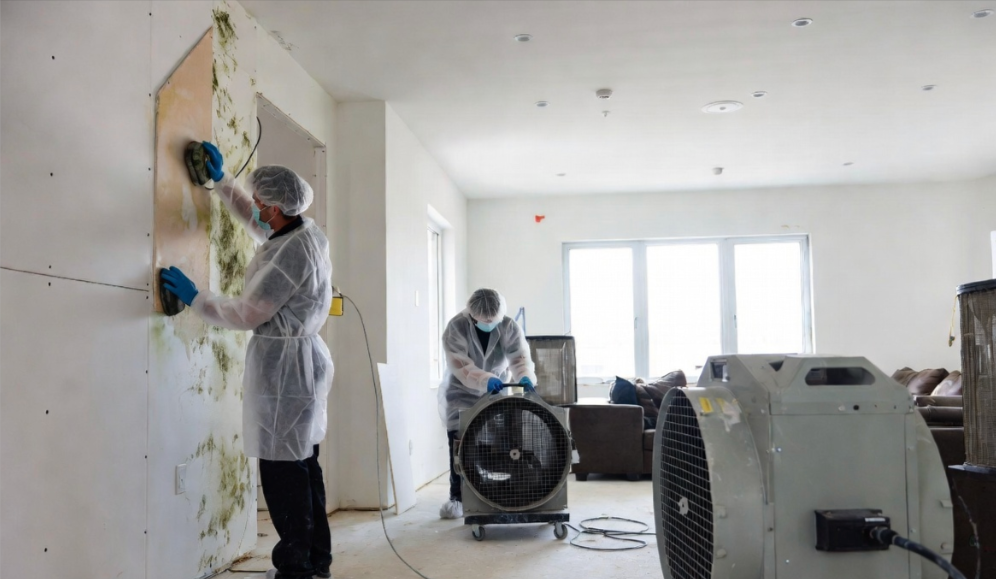
Professional water damage restoration addresses this risk through controlled drying, antimicrobial treatments, and verification testing. When moisture levels are measured and documented as returning to normal standards, it can help reduce any lingering anxiety.
Without that verification, the nervousness can persist long after the structural repairs appear finished.
Relationship Strain Under Pressure
High-stress events test communication patterns in any relationship. Flood damage introduces financial decisions, scheduling pressures, and fatigue, all simultaneously. Disagreements over budgets, contractor choices, or repair priorities are common in these scenarios.
Stress alters tone and patience thresholds for most, if not all, people. Minor misunderstandings can escalate more easily when sleep is limited and routines are displaced. It’s a volatile time for everyone involved, but it doesn’t have to be the defining factor.
Clear planning helps to mitigate this strain. When roles are defined and the restoration service follows predictable (and outlined) steps, the amount of tension decreases. The situation may still be inconvenient, but it becomes manageable.
Community-Level Impact in Northern Utah
Flood damage often occurs seasonally around these parts. Rapid snowmelt, heavy rain, or deep winter freezes can affect multiple homes within the same neighborhood, and often do. When entire communities face potential water damage at the same time, demand for flood restoration companies increases sharply.
This limited availability can also intensify stress levels. Homeowners having to worry about scheduling delays and material shortages when faced with critical response times is not something that helps with stress, exactly, and seeing similar damage next door reinforces the seriousness of the situation.
However, this shared experience can also foster mutual support. We’ve seen neighbors exchange recommendations, share mitigation strategies, and provide temporary accommodations when needed. Community response influences emotional recovery just as much as structural repair, and we’re proud to see how Northern Utah responds.
The Psychological Value of Structure
The emotional toll of flood damage directly ties with how organized the response becomes. Chaos fuels anxiety, while process restores stability.
Professional water damage restoration involves measurable steps: assessment, extraction, drying, documentation, and reconstruction. Flood cleanup transitions from reactive scrambling to managed progression, and this does help provide some stability in an otherwise chaotic moment.
Flood restoration companies that emphasize communication and transparency provide more than technical expertise—they provide predictability. Predictability is psychologically stabilizing.
Long-Term Effects and Preventative Confidence
Even after restoration services are complete, some homeowners remain hyper-aware of plumbing sounds or weather forecasts, and this heightened awareness is understandable. Experiencing flood damage once can alter the perception of risk a homeowner originally had.
Preventative upgrades can help rebuild that original confidence. Insulated pipes, sump pump backups, leak detection systems, and routine inspections restore a sense of agency after a period where it’s easy to feel like you have too little. When homeowners actively reduce their vulnerability, emotional recovery accelerates.
Flood Damage Is More Than a Structural Event
Flood damage is both physical and psychological. It disrupts routines, challenges finances, tests relationships, and erodes certainty. In Northern Utah’s demanding climate—where freezing winters and heavy snowmelt are part of life—the potential for water seeping into places it shouldn’t is persistent.
Professional water damage restoration and coordinated flood cleanup do more than repair materials. They restore order. Flood restoration companies that provide comprehensive restoration services help transform a destabilizing event into a structured recovery process.
Structural integrity matters. So does emotional stability. Addressing both is essential for true recovery after flood damage.
You might also like
Utah Flood Guys Blog