When the Basement Fills: Who Handles Flood Damage Restoration in Northern Utah?
Fast response, professional cleanup, and local experts ready when water damage hits your home in Northern Utah.
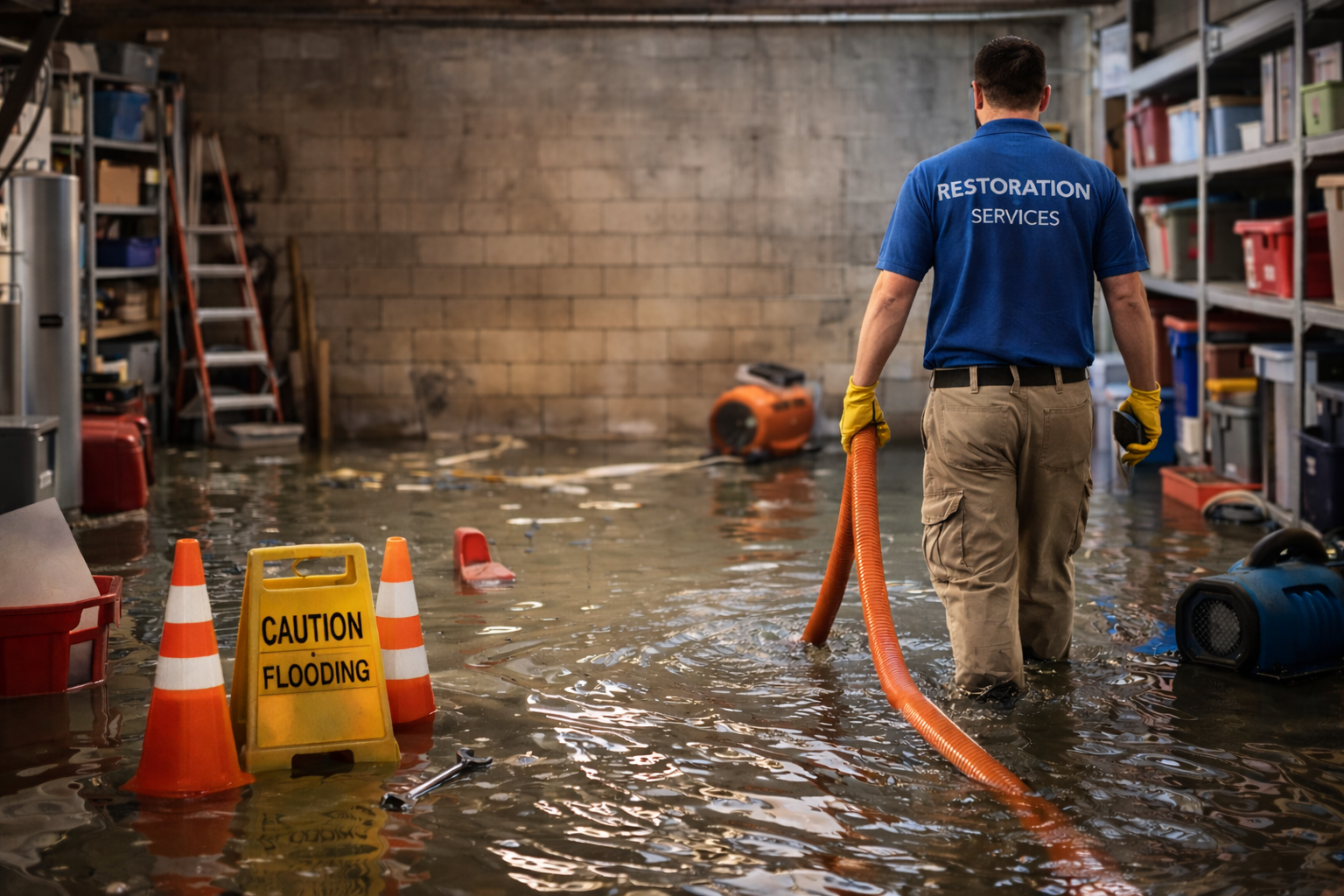
Basement flooding has a particular way of escalating from nuisance to crisis in a matter of hours. One minute you're noticing a damp spot near the water heater, and the next you're wading through two inches of standing water wondering how this happened so fast.
In Northern Utah—where snowmelt, frozen pipes, aging sump pumps, and sudden spring storms are part of the seasonal rhythm—lower levels are especially vulnerable. If you've got a finished basement (and let's be honest, most of us do), you already know that sinking feeling when you hear water where it shouldn't be.
When water begins pooling along foundation walls or saturating carpet, the immediate question becomes practical and urgent: who is qualified to handle the situation correctly? And maybe more importantly, who can get here fast?
This guide explores which local services handle basement flood cleanup, what true flood damage restoration actually involves, and how homeowners in communities from Ogden to Logan can respond decisively when water damage strikes below ground level.
Why Basements in Northern Utah Are So Vulnerable
Northern Utah homes frequently include finished basements, and there's good reason for that. The region's climate and lot grading often make below-grade living space not just common, but genuinely attractive. Extra square footage, cooler temperatures in summer, and that perfect spot for a home theater or guest bedroom—basements offer real value.
The tradeoff? Exposure to water damage that comes with the territory.
Heavy snowpack in the Wasatch Mountains leads to spring runoff that can saturate soil around foundations. We're talking about weeks of accumulated snow suddenly melting when temperatures spike in March or April. That water has to go somewhere, and it often finds its way toward your foundation.
Freeze-thaw cycles place stress on concrete walls and plumbing lines throughout winter. Even small cracks expand when water freezes inside them. Sump pumps, if improperly maintained or simply aging out, fail precisely when they are needed most—usually at 2 a.m. during the heaviest rainfall of the season.
When groundwater pressure builds, even minor foundation cracks can admit significant water. Add a frozen pipe burst during a January cold snap when temperatures drop below zero for days at a time, and the volume increases quickly. We've seen basements take on hundreds of gallons from a single failed supply line.
Here's the thing about basements: they collect water because gravity insists on it. Once water finds entry—through a crack, around a window well, or from a burst pipe—it spreads laterally across flooring, wicks into drywall, and migrates beneath subflooring where you can't see it working.
That's when flood damage restoration becomes more than a convenience. It becomes essential to protecting your home's structure and your family's health.
What Professional Flood Damage Restoration Actually Involves
A flooded basement may appear straightforward at first glance: extract water, dry surfaces, replace carpet, call it done. In reality, water damage behaves unpredictably below grade, and what you see is usually just a fraction of the problem.
Professional flood damage restoration typically includes several critical steps that work together:
Immediate extraction of standing water. This happens first, using truck-mounted extractors or portable units depending on access and volume. The goal is removing bulk water as quickly as possible to limit absorption into porous materials.
Moisture mapping using meters and thermal imaging. This is where professionals separate themselves from DIY attempts. Moisture meters measure saturation levels in walls, floors, and framing. Thermal imaging reveals temperature differentials that indicate hidden moisture behind surfaces. You're essentially creating a map of where water went and how far it traveled.
Removal of saturated porous materials when necessary. Sometimes carpet pad, insulation, or sections of drywall are too saturated to dry effectively or have been contaminated. Making the right call about what stays and what goes requires experience and moisture readings, not just visual inspection.
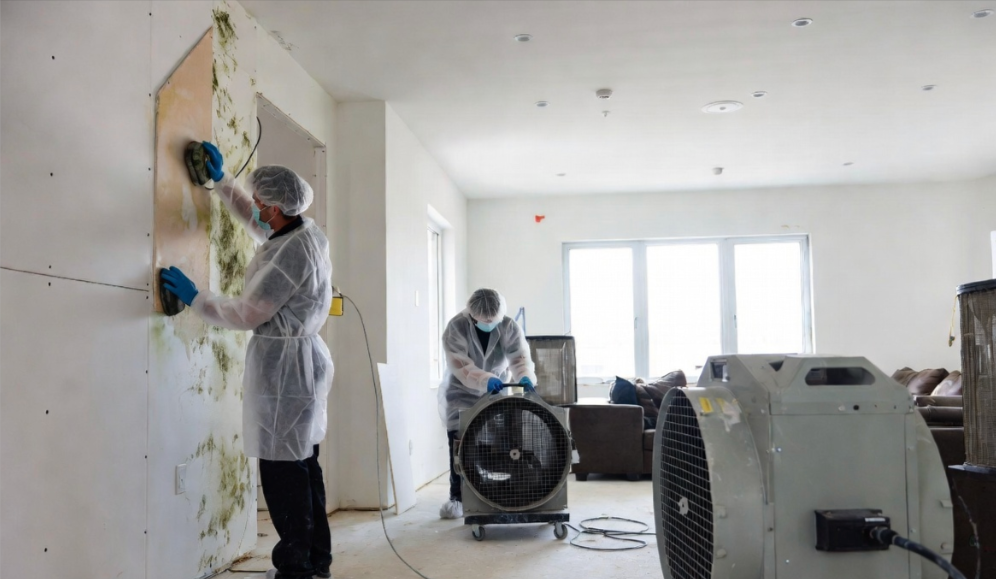
Industrial-grade drying with dehumidifiers and air movers. This phase takes days, not hours. Commercial dehumidifiers pull moisture from the air while air movers create circulation that promotes evaporation from surfaces and materials. The equipment runs continuously, often 24/7, until moisture levels drop to acceptable standards.
Monitoring moisture levels until structural components return to acceptable standards. Professionals take daily readings and adjust equipment placement as needed. Drying isn't finished when things feel dry to the touch—it's finished when moisture meters confirm that materials have returned to their normal moisture content range.
Sanitization if water contamination is present. Clean water from a supply line is one thing. Water from a sewer backup, sump pump failure, or ground saturation is another. Contaminated water requires antimicrobial treatment and sometimes complete removal of affected porous materials.
Here's what many homeowners don't realize: basements are particularly prone to concealed moisture. Concrete walls absorb water slowly but release it gradually over time. Wood framing and insulation retain moisture long after surfaces appear dry to the naked eye. Without controlled drying and verification, mold removal becomes not just likely, but inevitable.
In Northern Utah's cooler seasons, low ambient temperatures slow evaporation naturally. That's why professional-grade equipment and monitoring matter so much here. You can't just open windows and hope for the best when it's 35 degrees outside.
Why DIY Basement Drying Often Fails
It's tempting to assume that shop vacuums and household fans can handle a minor flood. We get it—the initial cost of professional restoration can feel steep, and there's a natural inclination to handle things yourself.
In some cases, truly small spills can be managed independently. A knocked-over bucket, a briefly overflowing sink—these might be within DIY territory if you catch them immediately and the water hasn't spread far.
Basement flooding rarely qualifies as minor, even when it doesn't look catastrophic at first.
The problem isn't surface water. The problem is saturation. Water travels beneath laminate flooring, soaks into baseboards, and wicks up drywall through capillary action—meaning it can climb several inches above the flood line just through absorption.
Homeowners often underestimate how far water damage spreads. By the time discoloration appears on drywall, moisture has usually migrated several inches higher inside the wall cavity. The visible damage is just the indicator of hidden saturation.
We've seen countless situations where homeowners spent a weekend running fans and thought they'd handled it, only to discover mold growth two months later. At that point, the cost of remediation and reconstruction far exceeds what proper drying would have cost initially.
Incomplete drying leads directly to mold removal costs later. Mold spores are already present in indoor air everywhere—your home, our homes, everyone's home. They only require moisture and time to colonize. Once they've established growth on organic materials like wood framing, drywall paper, or carpet backing, removal becomes a much more involved process.
Flood cleanup service providers prevent this secondary damage by measuring what cannot be seen and treating the problem comprehensively rather than cosmetically.
Basement Flooding and Mold Removal: A Critical Link
Basements provide ideal conditions for mold growth when moisture lingers. Limited airflow compared to upper floors, organic materials such as framing lumber and drywall, moderate temperatures, and porous surfaces create a receptive environment for colonization.
If flood damage restoration is delayed beyond 24 to 48 hours—and this window can be even shorter in warmer months—microbial growth risk increases significantly. Mold doesn't need standing water, just elevated humidity and damp materials.
Signs that mold removal may already be necessary include persistent musty odors that don't go away even after cleaning, visible spotting on drywall or framing (often appearing as dark specks or fuzzy patches), discoloration along baseboards that looks different from water staining, and recurring allergy-like symptoms indoors that improve when you leave the house.
Professional flood cleanup service providers aim to prevent these outcomes by reducing moisture quickly and thoroughly before mold has a chance to establish. However, if mold colonies develop, certified remediation becomes a separate and regulated process.
Remediation involves containment, removal of affected materials, HEPA filtration, and verification testing—all considerably more complex than preventive drying.
In Northern Utah's variable humidity conditions, preventive drying is considerably less disruptive and less expensive than reactive mold removal. The cost difference can be substantial, sometimes ten times more for remediation than for proper initial restoration.
Insurance Considerations for Basement Flood Damage
Insurance coverage depends heavily on cause, and this is where things can get complicated. Sudden pipe bursts are typically covered under standard homeowners policies as sudden and accidental water damage. That broken supply line or failed water heater? Usually covered.
Gradual seepage or groundwater intrusion may require separate endorsements or flood insurance policies. Water that comes up through floor drains during heavy rain or seeps through foundation cracks over time often falls outside standard coverage. This catches many homeowners by surprise.
Flood damage restoration companies commonly document moisture readings, affected materials, drying timelines, and equipment used. This documentation supports claims and reduces disputes with insurance adjusters. Having professional records that show exactly what was wet, how wet it was, and what was done about it makes a significant difference in claim outcomes.
Homeowners should act quickly after discovering flooding. Delayed reporting can complicate coverage decisions and give insurance companies grounds to question whether damage could have been mitigated sooner. Prompt engagement of a flood cleanup service not only protects structural materials but also strengthens insurance documentation and demonstrates that you took reasonable steps to minimize damage.
Many restoration companies work directly with insurance adjusters and understand what documentation carriers require. This can smooth the claims process considerably.
Seasonal Risk Patterns in Northern Utah
Understanding local risk patterns helps clarify why basement flood damage restoration is so frequently needed in our region. This isn't just random bad luck—there are predictable patterns based on our climate and geography.
Winter introduces frozen pipes and ice dams. When temperatures drop below zero for extended periods, pipes in exterior walls or unheated spaces can freeze and burst. Ice dams form on roofs when heat escapes through attics, melting snow that refreezes at the eaves and backs water under shingles. That water finds its way down to basements through wall cavities.
Spring brings rapid snowmelt and saturated soil. This is peak season for basement flooding in Northern Utah. Weeks of accumulated snowpack in the Wasatch Mountains suddenly melts when temperatures warm, overwhelming drainage systems and saturating soil around foundations. If your sump pump isn't up to the task or your foundation has any weakness, spring is when you'll find out.
Summer thunderstorms can overwhelm drainage systems with sudden, intense rainfall. While not as common as spring flooding, summer storms occasionally drop several inches of rain in a short window, backing up floor drains or finding entry through window wells.
Fall often reveals neglected sump pumps that haven't been tested since the previous year. As autumn rains increase, pumps that have been sitting idle suddenly need to work again—and sometimes they don't. Battery backups have often expired, float switches have corroded, or discharge lines have become clogged.
Basement water damage in Northern Utah is rarely random. It follows these seasonal patterns. Preparation reduces risk through maintenance and monitoring, but rapid response ultimately determines severity when flooding does occur.
Choosing the Right Flood Cleanup Service in Northern Utah
Not all providers operate at the same level of expertise, and choosing the wrong company can extend your recovery timeline or leave you with incomplete work.
When evaluating flood restoration companies, consider several key factors:
Certification and training in water damage restoration. Look for IICRC (Institute of Inspection, Cleaning and Restoration Certification) credentials, which indicate formal training in water damage restoration techniques and standards.
Availability for emergency response. Basement floods don't follow a 9-to-5 schedule. You need a company that responds quickly, even on weekends and holidays.
Moisture detection equipment capabilities. Ask what tools they use for moisture mapping and verification. Professional-grade meters, thermal imaging cameras, and hygrometers are essential for proper assessment.
Experience with basement-specific drying challenges. Below-grade spaces present unique challenges. Experience matters when determining how long concrete floors need to dry or whether wall cavities need opened for airflow.
Clear documentation practices. Companies that photograph damage, track moisture readings daily, and provide detailed reports make insurance claims smoother and give you confidence that the job is being done thoroughly.
Flood damage restoration is both technical and time-sensitive. The right provider reduces structural risk, prevents mold growth, and ultimately lowers long-term repair costs through proper initial response.
Final Thoughts: The Right Service at the Right Time
When a basement floods, confusion is completely normal. You're dealing with an emergency that disrupts your home and your life, often without warning. Understanding who does what helps cut through that confusion.
Plumbers fix pipes. Contractors rebuild walls. Mold removal specialists address microbial contamination. But comprehensive flood damage restoration belongs to trained restoration professionals who manage extraction, drying, and prevention from the outset—the people who bridge the gap between emergency and reconstruction.
In Northern Utah, where seasonal patterns regularly test below-grade spaces and our climate presents unique challenges, timely response is the defining factor between manageable water damage and prolonged structural complications.
Choosing an experienced flood cleanup service—such as Utah Flood Guys—ensures that water damage is not merely removed, but truly resolved. It's the difference between a temporary fix and lasting peace of mind, between recurring problems and proper restoration.
Your basement is part of your home's foundation, literally and figuratively. When water threatens it, the response you choose determines everything that follows.
You might also like
Utah Flood Guys Blog