Mold Removal in Salt Lake City: Why Basement Mold Keeps Coming Back and How to Prevent It
Many homeowners searching for mold removal Salt Lake City solutions are asking the same question: why does my basement keep growing mold no matter what I do?
Between clay-heavy soil, spring snowmelt, and older homes built without vapor barriers, basement moisture has become a persistent problem across Salt Lake City and the surrounding valley. Fortunately, there are proven ways to stop it without tearing out walls.
At Utah Flood Guys, we help local homeowners pinpoint hidden moisture sources, uncover what's really causing recurring mold, and apply practical fixes that lead to lower mold inspection Salt Lake City over time.
In this guide, you'll discover the steps Salt Lake City homeowners use every year to keep their basements dry and mold-free.
Quick Answers
What causes basement mold in Salt Lake City?
Clay-heavy soil, spring snowmelt, and homes built without vapor barriers push groundwater into below-grade walls.
How do I get rid of mold in my Salt Lake City basement?
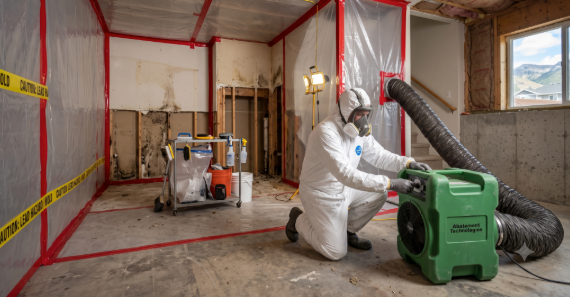
Schedule a professional inspection, fix the moisture source, then remove the affected materials with proper containment.
Can a local company really stop recurring basement mold?
Yes — companies like Utah Flood Guys address the water source and the mold together, which is the only way to stop it from coming back.
Why Is Basement Mold So Common in Salt Lake City?
Several local and seasonal factors influence how much moisture ends up in a basement.
Common reasons include:
- High clay content in Salt Lake Valley soil, which holds water against foundations
- Heavy spring runoff from nearby mountain snowmelt
- Older homes built without modern vapor barriers or drainage systems
- Poor exterior grading that channels water toward the foundation
- Sealed-up basements with little airflow during winter months
According to the EPA's mold guidance, controlling moisture is the single most effective way to prevent mold growth indoors, regardless of climate or building age.
Understanding these factors helps homeowners make smarter prevention decisions instead of just running a fan and hoping for the best.
What Causes Mold to Keep Returning in Salt Lake City Basements?
Let's be real — most people in Salt Lake City don't think about basement moisture until they smell it.
But here's what's actually happening behind the scenes.
What's really causing the mold in your basement without you noticing?
- Rising groundwater pressure during spring runoff across Salt Lake City
- Cracked foundation walls are letting moisture seep in slowly
- Not addressing a leak right after it happens
- Skipping a mold inspection visit to Salt Lake City after a past flood
- Running a dehumidifier without fixing the real moisture source
Schedule a basement mold inspection with the Salt Lake City homeowners trust.
How to Prevent Basement Mold Removal Salt Lake City Step-by-Step
Most people try random fixes. That's why the mold keeps coming back.
Let's fix that.
What's the smartest way to actually stop basement mold for good?
- Get a professional mold inspection in Salt Lake City to find hidden moisture
- Seal foundation cracks before they widen
- Fix exterior grading so water drains away from the home
- Run a dehumidifier set to keep humidity below 50%
- Improve basement ventilation, especially in closets and storage areas
- Re-check the same spots every spring runoff season
Small fixes can make a big difference, and you can review additional consumer guidance from the U.S. Centers for Disease Control and Prevention on managing indoor mold exposure safely.
Risks of Ignoring Mold Removal Salt Lake City Homeowners Face
Ignoring it sounds harmless until it isn't.
And yeah, we've seen Salt Lake City homeowners learn this the hard way.
What can go wrong when basement mold is left untreated?
- Mold spreading into framing, insulation, and HVAC ducts
- Higher remediation costs the longer it's left untreated
- Health symptoms like coughing, congestion, or skin irritation
- Reduced resale value if mold shows up during a home inspection
- Recurring growth if the moisture source is never addressed
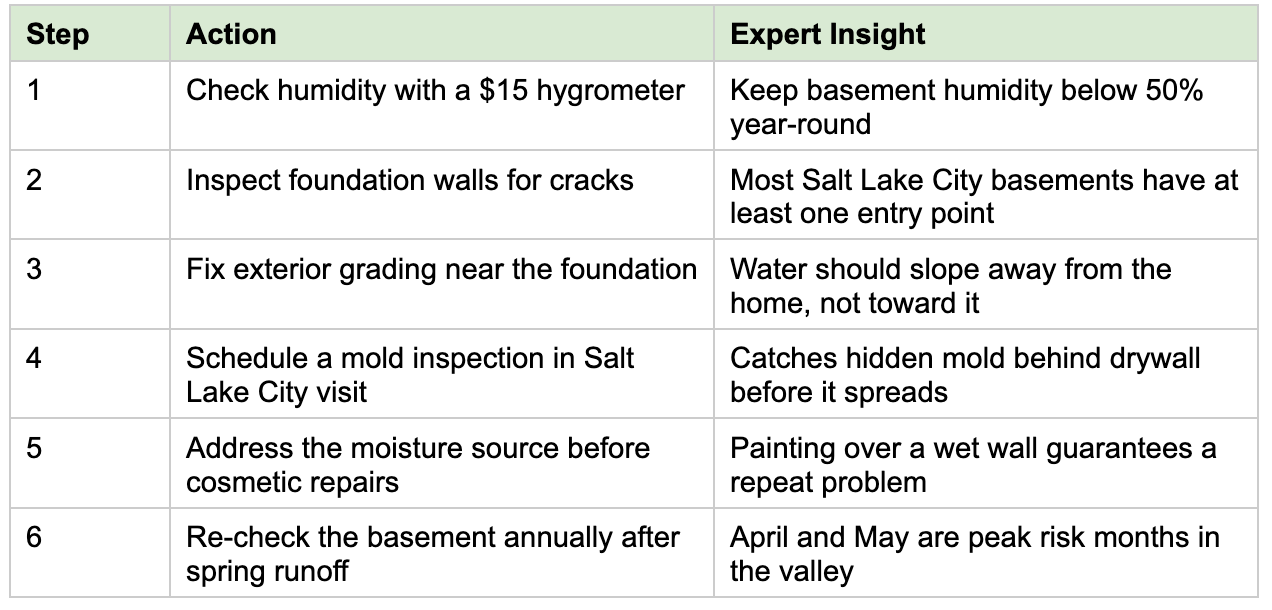
Unique Action Plan Table
What's the most efficient way Salt Lake City homeowners can actually stop basement mold fast?
When to Check Your Basement for Mold in Salt Lake City
Timing is where most prevention gets missed.
When should Salt Lake City homeowners actually check their basements?
- After spring snowmelt, when groundwater pressure peaks
- Before winter, when sealed-up humidity builds indoors
- After any storm or plumbing leak, within 48 hours
- After buying a home with an unfinished or partially finished basement
- Basement moisture risk changes more often than most homeowners realize
Why Utah Flood Guys Is the Salt Lake City Choice for Mold Removal
Most homeowners don't want technical jargon — they want straight answers.
That's where Utah Flood Guys stands out in Salt Lake City.
We help local homeowners find the real moisture source, understand what's driving recurring mold, and fix it without guesswork. Instead of pushing a one-size-fits-all service, we focus on what actually fits your basement and your home's history in Salt Lake City and surrounding areas like Sandy and South Jordan. If a past leak is part of the story, it's worth pairing mold removal with water damage restoration in Salt Lake City, since the two problems almost always travel together.
What makes a local crew better than a national call center in Salt Lake City?
Response time and follow-through. We're based right here in Sandy, so calls don't route through a national dispatch line, and we've fixed plenty of jobs where a previous contractor just painted over the problem.
Ready to Stop Recurring Basement Mold?
If you've noticed a musty smell, damp walls, or recurring mold in your basement, addressing the moisture source early can help prevent more extensive repairs later. Whether you need a professional inspection or complete mold remediation, the team at Utah Flood Guys is here to help homeowners throughout Salt Lake City find practical, long-lasting solutions.
Request Your Free Mold Inspection Today
Key Takeaways
- Basement mold in Salt Lake City is driven by clay soil, spring runoff, and older homes without vapor barriers.
- Sealing foundation cracks and fixing exterior grading remain some of the fastest ways to prevent mold.
- Running a dehumidifier without fixing the moisture source rarely solves the problem long-term.
- Reviewing your basement after every spring runoff season helps prevent overlooked moisture damage.
- A musty smell often means mold, even when nothing is visible yet.
- Painting over mold without removing it usually leads to costlier problems later.
- Utah Flood Guys helps Salt Lake City homeowners find the source and stop mold from returning.
Quick Summary
Recurring basement mold is usually a moisture problem before it's a mold problem. In Salt Lake City, clay-rich soil, spring snowmelt, and older foundations often allow moisture to collect around basement walls. Preventing mold starts with identifying the source of water, improving drainage and ventilation, and addressing damage quickly. A professional inspection can uncover hidden issues before they become larger, more expensive repairs.
FAQ Section
How much does mold removal cost for a Salt Lake City basement?
Most residential basement mold removal in Salt Lake City runs between $500 and $3,500, depending on square footage and whether drywall or framing needs replacing.
How long does basement mold remediation take?
A typical Salt Lake City basement job takes two to five days from containment through final clearance testing.
What happens if I just paint over basement mold instead of removing it?
Painting over mold traps moisture underneath and almost always lets it grow back within months, often worse than before.
What's the first step if I think I have mold in my Salt Lake City basement?
Call for a professional mold inspection before scrubbing anything yourself, since disturbing dry mold can spread spores into the air.
Is professional mold remediation worth it for a small basement spot in Salt Lake City?
If the affected area is under roughly 10 square feet, some homeowners safely handle it themselves. Anything larger or recurring is worth a professional look.
You might also like
Utah Flood Guys Blog