Why Do Lehi UT Homes Flood, and How Fast Does Mold Follow?
Flood restoration
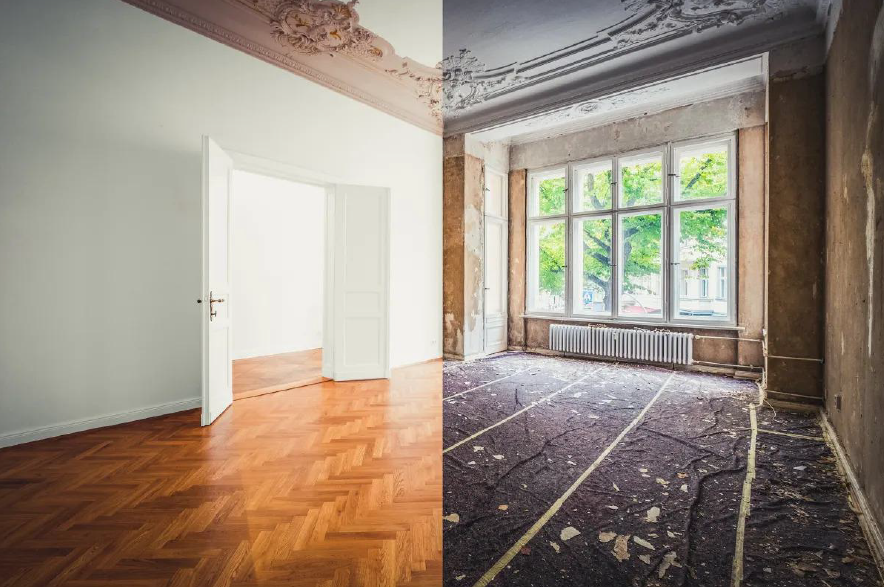
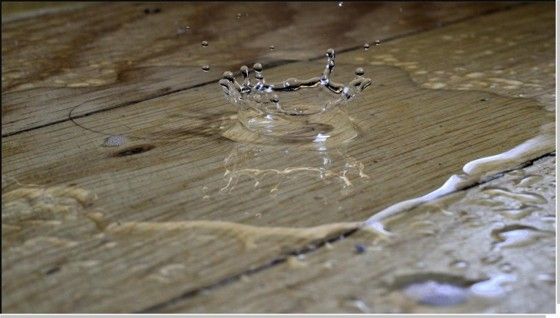
Water does its worst damage quietly. The visible puddle on a basement floor is the part homeowners react to, but the water that has already wicked up drywall, run under the carpet pad and soaked into the framing is the part that decides how expensive the repair becomes. That gap between what you can see and what is actually wet is why Flood restoration Lehi UT work is measured in hours, not days.
Utah Flood Guys responds across Utah County and the Salt Lake Valley with 24/7 emergency service. This article covers why homes in Lehi and the surrounding Utah County communities flood in the first place, what happens to a structure hour by hour once water gets in, and the point at which a water problem quietly becomes a mold problem.
Quick Answers
How quickly should water damage be addressed?
Extraction should begin as soon as it is safe to do so. Materials keep absorbing water the entire time it sits, and mold growth can begin within roughly 24 to 48 hours under the right conditions.
Does homeowners insurance cover flooding?
It depends on the source. Sudden internal failures such as a burst pipe or failed water heater are commonly covered, while groundwater and surface flooding usually require separate flood coverage. Document everything and check your specific policy.
Why Lehi Homes Take On Water
Utah County sits at the base of the Wasatch, and that geography drives most of what we see. Homes here flood for reasons that are seasonal and fairly predictable once you know the pattern.
● Spring runoff — a heavy snowpack melting quickly raises groundwater, saturates soil and pushes water against foundations that handle a normal year without complaint.
● Winter pipe failures — hard overnight freezes split supply lines in unheated crawl spaces, garages and exterior walls, often releasing water for hours before anyone notices.
● Failed water heaters and appliances — tanks, supply lines and washing machine hoses fail without warning, and a burst line runs continuously until the main is shut off.
● Sump pump failure — a pump that stops during a storm or power outage turns a managed water table into a flooded basement within hours.
● Grading and downspouts — soil that has settled toward the foundation, or downspouts discharging next to the wall, steers roof runoff straight down to the footing.
● New-construction settling — in newer subdivisions, backfill compacts over the first few years and can change how water moves around a foundation.
The common thread is that none of these announce themselves. A slow supply-line drip behind a wall can run for weeks, and by the time a stain appears the cavity behind it has been wet the entire time.
What Actually Happens in the First 48 Hours
Water moves through a house in a predictable order, and understanding it explains why response speed matters so much financially.
In the first hours, water spreads horizontally and is absorbed by the most porous materials it touches — carpet pad, drywall, insulation, particleboard. Drywall wicks moisture upward well above the waterline, which is why crews often find the wall wet a foot higher than the flood reached. Within the first day, that absorbed moisture begins migrating into framing and subfloor, and the air in the space reaches saturation so that even materials never touched directly start taking on humidity.
Somewhere around the 24-to-48-hour mark, given the right temperature and an organic food source such as paper-faced drywall, mold can begin to establish. Nothing dramatic happens at that moment, which is precisely the problem — a homeowner who waited a few days to call often cannot tell the difference by looking, but the scope of work has changed.
This is the reason Emergency water damage repair Lehi UT crews prioritize extraction and airflow before anything else. Every hour water sits is another hour of absorption that has to be reversed.
What Professional Flood Restoration Involves
Proper restoration is a measured process rather than a cleanup. A shop vacuum and a household fan address the water you can see; they do not address the water inside the assembly.
The work runs in sequence: stop the source and make the area safe, extract standing water with truck-mounted or portable equipment, then map moisture with meters and thermal imaging to find where water actually traveled. Only then does drying begin — air movers to lift moisture out of surfaces and dehumidifiers to pull it out of the air, with readings taken daily until materials return to normal levels. Materials that cannot be dried in place, typically saturated insulation and carpet pad, are removed rather than dried around.
That daily documentation matters for more than quality control. Utah Flood Guys provides the photographs and documentation an insurance claim requires and uses Xactimate estimating software, which is the standard most carriers work from.
Where Water Damage Turns Into a Mold Problem
Mold needs three things: moisture, an organic food source and time. A Utah home supplies the second one everywhere — drywall paper, wood, dust. Restoration is fundamentally about removing the first one before enough of the third accumulates.
Signs that moisture has been present longer than anyone realized include a persistent musty smell with no visible source, discoloration bleeding through paint, drywall that feels soft or bulges slightly, warped baseboards or flooring, and joints that have separated as materials swelled and shrank.
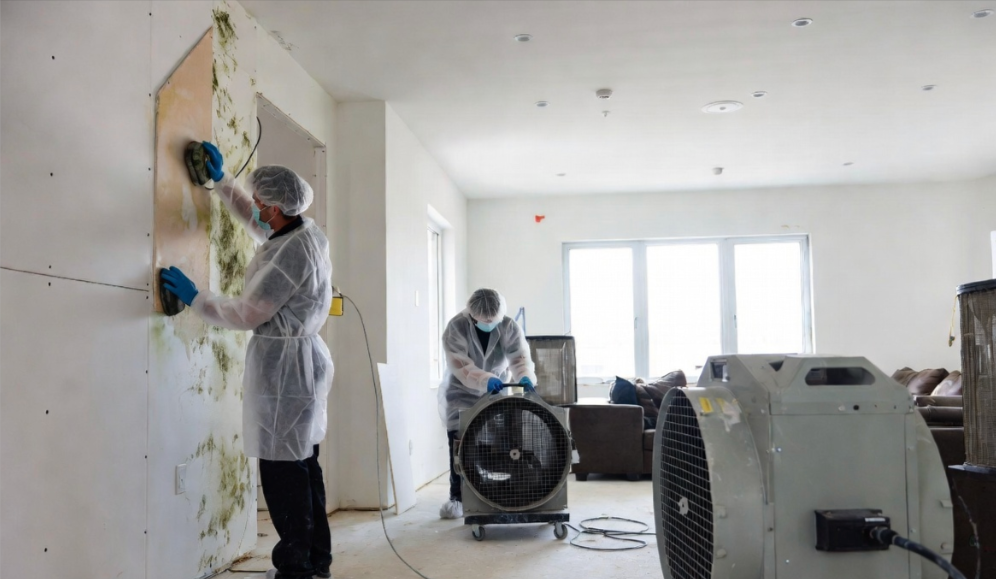
When Mold remediation services Lehi UT homeowners need do become necessary, the process differs from drying. Contaminated materials are removed under containment, the area is placed under negative air pressure with HEPA filtration so spores are not distributed through the rest of the house, surfaces are cleaned, and the moisture source is corrected — because remediation without fixing the source simply resets the clock.
The U.S. Environmental Protection Agency publishes guidance on mold and moisture control for homeowners, including its general recommendation that professional help is warranted for larger affected areas and for contaminated water.
What to Do Before the Crew Arrives
The steps a homeowner takes in the first half hour genuinely affect the outcome, provided they can be done safely.
● Shut off the water at the main if the source is a supply line or appliance
● Cut power to the affected area at the breaker if water is anywhere near outlets or fixtures — never wade into standing water to reach a panel
● Photograph everything before moving anything, for the insurance claim
● Lift furniture off wet carpet or place foil or blocks under the legs to stop finishes staining the floor
● Move documents, electronics and anything irreplaceable to a dry area
● Open interior doors and closets so air can reach enclosed spaces
● Leave wet drywall and flooring in place — removal decisions come after moisture mapping
What not to do is equally important. Do not run a household fan across visible mold growth, which spreads spores. Do not assume a space is dry because the surface feels dry. And do not delay the call to protect a deductible — the cost of waiting almost always exceeds the cost of responding.
Choosing Who Responds
Restoration is one of the few trades a homeowner hires under real pressure, usually at an inconvenient hour, with no time to compare options. That is worth thinking about before you need it.
The questions that matter: are they licensed and insured, can they actually respond around the clock rather than the next business morning, do they document moisture readings daily, will they work directly with your insurer, and do they handle both the drying and the rebuild so you are not managing two contractors.
Utah Flood Guys holds a B100 General Contractor license, carries an A+ rating with the Better Business Bureau, and is licensed and insured. Because the company handles water, fire and mold work across Salt Lake, Tooele, Davis, Wasatch, Juab and Utah Counties, a single crew can carry a Lehi job from the first extraction through to the finished repair.
Water in your home right now?
Call Utah Flood Guys at 801-800-6857. Emergency crews respond 24 hours a day across Utah County and the Salt Lake Valley — and the sooner drying starts, the less gets replaced.
Key Takeaways:
Flood restoration Lehi UT work is time-sensitive because materials keep absorbing water the entire time it sits.
Most Lehi flooding traces back to spring runoff, frozen pipe failures, appliance or water heater failure, or sump pump loss.
Mold can begin establishing within roughly 24 to 48 hours, which is why emergency water damage repair Lehi UT crews prioritize extraction and airflow first.
Proper drying uses moisture meters and daily readings, not the appearance of a dry surface.
Utah Flood Guys is licensed and insured, holds a B100 General Contractor license, and documents everything your insurance claim requires.
Why Utah County Homeowners Call Utah Flood Guys
A flooded home is stressful enough without managing several contractors and an insurance adjuster who each want something different.
Homeowners across Lehi and Utah County work with Utah Flood Guys for:
● Flood restoration Lehi UT with genuine 24/7 emergency response
● Water extraction, structural drying and moisture monitoring
● Mold remediation services Lehi UT under proper containment
● Fire and smoke damage restoration
● Full documentation and photos for your insurance claim, estimated in Xactimate
● A B100 General Contractor license covering drying through rebuild
● An A+ rating with the Better Business Bureau
Service covers Salt Lake, Tooele, Davis, Wasatch, Juab and Utah Counties, so the same team that dries the structure can complete the repairs afterward.
Final Thoughts
Flooding is not usually a single dramatic event. It is a slow accumulation of damage that starts the moment water arrives and continues quietly until someone stops it, which is why the response window matters more than the size of the leak.
Homeowners who call early generally lose materials. Homeowners who wait generally lose materials and structure, and often end up with a mold remediation on top of the drying they needed in the first place.
Visit https://www.utahfloodguys.com/ or call 801-800-6857 any hour for Flood restoration Lehi UT homeowners can reach us the same night.
Frequently Asked Questions (FAQs)
1. How fast should I call for flood restoration Lehi UT?
Immediately, once the area is safe. Materials absorb water continuously while it sits, and mold can begin establishing within roughly 24 to 48 hours, so the first hours have the largest effect on how much has to be replaced.
2. How long does it take to dry a flooded basement?
Most structural drying takes about three to five days, depending on how much water was absorbed, which materials are involved and how well the space holds airflow. Daily moisture readings determine when drying is genuinely complete rather than a fixed schedule.
3. Can I just dry it out myself with fans?
Household fans move surface air but do not remove moisture from inside wall cavities, subfloor or framing, and a dehumidifier sized for a room cannot handle a saturated structure. Surfaces feel dry while the assembly behind them stays wet, which is how mold problems start.
4. Will my insurance cover the damage?
Sudden internal failures such as burst pipes and failed water heaters are commonly covered, while groundwater and surface flooding usually need separate flood coverage. Photograph everything before moving it and check your specific policy, since terms vary.
5. Do I need mold remediation after water damage?
Not always. If extraction and drying begin quickly and materials return to normal moisture levels, remediation is often unnecessary. It becomes necessary when water sat long enough for growth to establish, which is assessed on site rather than assumed.
You might also like
Utah Flood Guys Blog